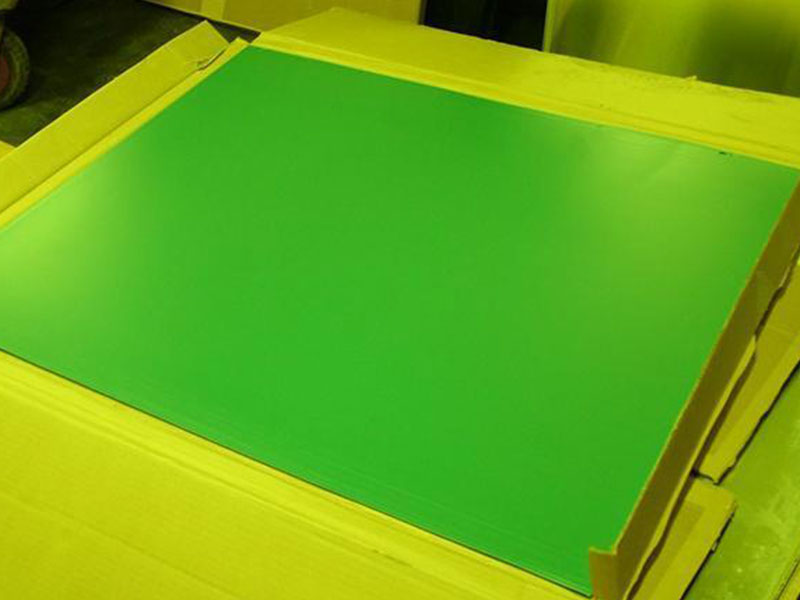
Thermal UV CTP Plate CTCP aluminum ctcp printing plate
Thermal UV CTP Plate and CTcP Aluminum Printing Plate: Where Chemistry Meets Deadline
In modern offset printing, speed is only valuable when it arrives with repeatable quality. That is why Thermal UV CTP plate CTCP aluminum ctcp printing plate solutions have become the quiet foundation of reliable prepress. From the outside, an aluminum plate looks simple. From the production floor perspective, it's a precision-engineered surface where alloy metallurgy, electrochemical graining, anodic structure, and photosensitive coating work together to translate digital data into press-ready performance.
A functional view: what the plate actually does
A CTP/CTcP plate performs three core jobs simultaneously.
It holds a stable geometry. The aluminum base must remain flat, dimensionally consistent, and resistant to deformation under clamp pressure and cylinder tension.
It creates selective ink acceptance. The plate surface is engineered so the image area becomes ink-receptive while non-image areas remain water-friendly. That contrast is the heart of offset lithography.
It survives the press environment. The coating and anodized layer must resist abrasion, chemical attack, fountain solution, alcohol substitutes, and press wash-while maintaining dot integrity.
Thermal and UV imaging systems differ in how they trigger that image/non-image separation, but both depend heavily on the aluminum substrate's microstructure and oxide architecture.
Thermal CTP vs UV-CTP vs CTcP: same mission, different physics
Thermal CTP plates are typically imaged with 830 nm infrared lasers. Their advantage is process stability: thermal exposure is less sensitive to ambient light and can deliver consistent dot formation across shifts and seasons. Thermal plates often support longer run lengths and robust reproduction in demanding jobs such as packaging or high-coverage commercial work.
UV-CTP plates are imaged with violet/UV lasers commonly around 405 nm. They tend to offer fast imaging and efficient workflow, often favored in commercial environments with high throughput needs. Many UV plates are designed for low chemistry consumption and clean processing.
CTcP (computer-to-conventional-plate) generally refers to plates imaged by visible/UV systems but developed similarly to conventional PS plates. CTcP provides a bridge for printers upgrading from film-based workflows while keeping familiar processing behavior.
In all cases, performance hinges on the aluminum: the plate's grain anchors the coating, the anodic layer governs hydrophilicity, and the alloy temper influences strength, bending, and press stability.
Applications that benefit from a "surface-first" plate choice
Commercial printing benefits from plates with fast imaging response, clean development latitude, and stable dot reproduction for fine text and halftones.
Newspaper and high-throughput jobs favor plates that develop quickly, tolerate varying pressroom conditions, and offer predictable ink-water balance.
Packaging and label work often demands stronger abrasion resistance, higher resolution for barcodes and small typography, and longer run length-especially for spot colors and heavy solids.
In each application, choosing between thermal UV CTP and CTCP aluminum ctcp printing plate types often comes down to workflow priorities: imaging speed, processing style, run length, and how aggressive the press chemistry is.
Technical parameters customers actually care about
Common, market-accepted ranges for aluminum CTP/CTcP plates are listed below. Exact values depend on plate type and manufacturer configuration, but these are practical reference points for purchasing and press matching.
Typical product parameters (reference ranges)
| Item | Typical Range / Option |
|---|---|
| Plate thickness | 0.15 mm, 0.20 mm, 0.24 mm, 0.30 mm, 0.40 mm |
| Plate width/length | Custom cut; coil or sheet supply |
| Aluminum alloy | 1050, 1060, 1070, 3003 (common plate-grade options) |
| Temper | H18 (high strength), H19 (extra hard), sometimes H16 depending on need |
| Surface | Electrochemically grained + anodized, hydrophilic treatment |
| Coating type | Thermal sensitive, UV/violet sensitive, or CTcP conventional-type |
| Imaging wavelength | Thermal 830 nm; UV/violet 405 nm (typical) |
| Resolution capability | Up to 1–99% dots depending on screening and workflow |
| Developer | Plate-type specific; processor or chemistry-free options exist |
| Run length | Often from tens of thousands to 100,000+ impressions depending on coating and press conditions |
Rather than treating these as abstract numbers, it helps to translate them into outcomes. Thicker plates resist deformation and improve register stability on long runs. Harder temper reduces stretching but requires correct bending settings. A well-controlled anodized layer improves water retention in non-image areas, stabilizing ink-water balance and reducing toning.
Implementation standards and quality expectations
A dependable plate supplier typically aligns production and quality control with recognized aluminum and printing-plate practices. In industry language, this means material consistency, traceability, and surface uniformity rather than a single universal standard.
Commonly referenced frameworks include ISO-style quality systems and aluminum chemical composition norms used across the supply chain. Customers should expect documented control of base aluminum composition, mechanical properties, coating weight uniformity, surface roughness consistency, and anodic layer stability.
If your workflow is sensitive-stochastic screening, high-line ruling, or very low dot percentages-ask specifically about graining uniformity, anodizing process control, and coating response curves for your platesetter power and developer condition.
Alloy tempering and substrate conditions: the "invisible" performance lever
Most aluminum CTP substrates use high-purity 1xxx series alloys or 3xxx series alloys. Purity supports consistent anodizing and clean hydrophilicity, while manganese-containing alloys can offer improved strength.
Temper matters because the plate must behave predictably during punching, bending, mounting, and press cycling. Hard tempers such as H18/H19 improve stiffness and reduce mechanical distortion. For presses with aggressive cylinder clamp forces or high-speed operation, choosing the correct temper can reduce register drift and micro-cracking at bends.
Good plates also control residual stress and flatness. A plate that looks fine in a stack can still "walk" on press if internal stresses release during bending or heating, which is why reputable production emphasizes controlled rolling and leveling.
Chemical properties: typical aluminum plate base composition
Below is a commonly used reference composition table for plate-grade aluminum alloys. Actual limits depend on the exact alloy designation and supplier specification, but this provides a practical snapshot of what customers mean by "plate-grade aluminum."
Typical chemical composition (wt.%)
| Element | 1050 | 1060 | 1070 | 3003 |
|---|---|---|---|---|
| Al | ≥99.50 | ≥99.60 | ≥99.70 | Balance |
| Si | ≤0.25 | ≤0.25 | ≤0.20 | ≤0.60 |
| Fe | ≤0.40 | ≤0.35 | ≤0.25 | ≤0.70 |
| Cu | ≤0.05 | ≤0.05 | ≤0.04 | 0.05–0.20 |
| Mn | ≤0.05 | ≤0.05 | ≤0.03 | 1.0–1.5 |
| Mg | ≤0.05 | ≤0.05 | ≤0.03 | ≤0.10 |
| Zn | ≤0.05 | ≤0.05 | ≤0.03 | ≤0.10 |
| Ti | ≤0.03 | ≤0.03 | ≤0.03 | ≤0.10 |
Why it matters in printing terms: higher purity alloys generally anodize more uniformly, supporting consistent hydrophilicity and reducing background toning risk. Strength-oriented alloys can improve mechanical handling but require well-tuned graining and anodizing to maintain water receptivity.
The takeaway: choosing a plate by function, not buzzwords
When buyers search "Thermal UV CTP Plate CTCP aluminum ctcp printing plate," they're often comparing technology labels. A more reliable approach is to match the plate to what your operation needs the plate to do: resist wear, image consistently at your laser wavelength, develop cleanly in your processing reality, and maintain ink-water balance under your press chemistry.
https://www.al-sale.com/a/thermal-uv-ctp-plate-ctcp-aluminum-ctcp-printing-plate.html