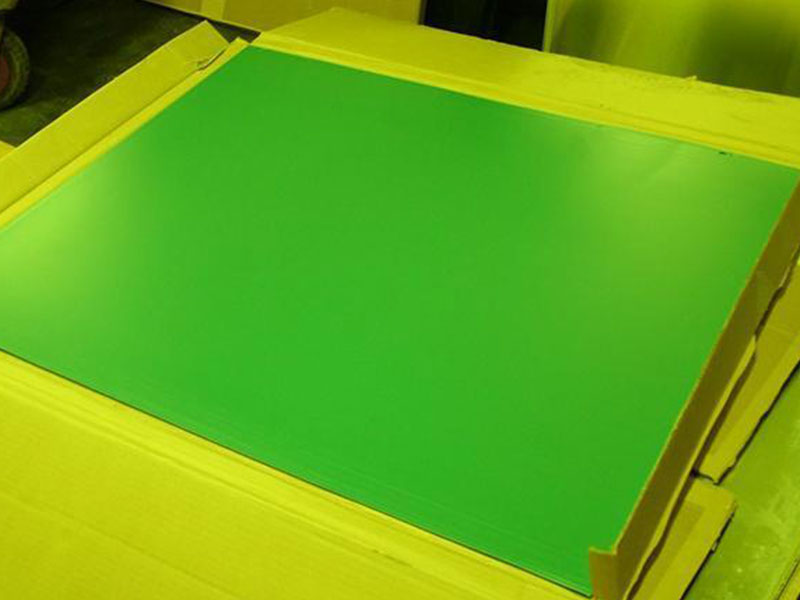
Positive Offset Printing Thermal CTP Plate UV CTP CTCP Plate
Positive Offset Printing Thermal CTP Plate UV CTP CTCP Plate
In offset printing, the plate is often treated like a "consumable." Yet the plate is also the most quietly sophisticated piece of engineering on the press line: a laminated system where aluminum metallurgy, electrochemistry, surface physics, and photopolymer behavior agree to cooperate for tens of thousands of impressions. When people compare Thermal CTP, UV CTP, and CTcP plates, the conversation usually circles around imaging speed or laser wavelength. A more revealing perspective is to see each plate type as a different negotiation between energy, chemistry, and the aluminum substrate that carries the whole process.
From that angle, the question is not "which plate is newer," but "which plate architecture best fits the way your shop actually behaves"-your fountain solution habits, your bake workflow, your ink set, your run lengths, your storage climate, and even the way operators handle plates on a busy day.
The shared foundation: aluminum that behaves like a precision instrument
All these plates begin with an aluminum alloy sheet engineered for flatness, grainability, and anodizing response. The base aluminum is not chosen because it is cheap; it is chosen because it can be made hydrophilic, dimensionally stable, and micro-textured in a repeatable way.
In practical production, the dominant substrate is high-purity Al with trace alloying to control strength and processing. Most premium litho plate bases use AA1xxx series (often 1050, 1060, 1070) because purity supports uniform electrochemical graining and anodic film growth. Some suppliers also use AA3xxx variants for specific stiffness or cost balance, but the tradeoff is usually in anodizing consistency and fine-grain uniformity.
Typical implementation standards and references you'll encounter across plate-base supply chains include ISO 12635 (plates for offset printing), ISO 9001 quality management, and environmental controls aligned with ISO 14001. In many contracts, plate-base tolerances are defined in terms of thickness, flatness, surface roughness after graining, and anodic film weight rather than by "alloy name" alone-because print performance lives in the surface.
Below is a practical reference table for common plate-base aluminum used in CTP/CTcP products.
Aluminum alloy substrate: typical chemistry and mechanical state
Common lithographic plate base alloys and chemical limits (wt.%)
| Alloy | Si | Fe | Cu | Mn | Mg | Zn | Ti | Al (min) |
|---|---|---|---|---|---|---|---|---|
| AA1050 | ≤0.25 | ≤0.40 | ≤0.05 | ≤0.05 | ≤0.05 | ≤0.07 | ≤0.05 | 99.50 |
| AA1060 | ≤0.25 | ≤0.35 | ≤0.05 | ≤0.03 | ≤0.03 | ≤0.05 | ≤0.03 | 99.60 |
| AA1070 | ≤0.20 | ≤0.25 | ≤0.04 | ≤0.03 | ≤0.03 | ≤0.04 | ≤0.03 | 99.70 |
These are widely used composition envelopes; exact limits can vary slightly by regional specification and mill practice.
Typical tempering condition (substrate)
Plate base is commonly supplied in H18 or H19 (full-hard to extra-hard) to ensure stiffness and handling robustness at thin gauges. Typical thickness ranges for commercial plates are around 0.15–0.40 mm, with 0.30 mm common in sheet-fed and thicker options used when press cylinder requirements or long-run stability demand it.
Graining, anodizing, and the "water memory" of the plate
Before any photosensitive layer is applied, the aluminum is electrochemically grained to create a controlled micro-roughness. This roughness is not decorative; it is a water-holding topography that gives the non-image areas a stable hydrophilic character. After graining, anodizing builds an aluminum oxide layer that is porous at the microscopic scale. Those pores can be sealed or chemically treated, and they provide both wear resistance and a scaffold for the coating.
A useful way to picture this is to imagine the anodized plate as a city of tiny reservoirs and streets. Fountain solution "parks" in the reservoirs, ink is repelled from those districts, and the image areas are the zones where chemistry later flips the behavior so ink can take residence.
Thermal CTP plates: discipline through heat
Thermal CTP plates are imaged by infrared lasers, commonly around 830 nm. Their personality is "stability first." Thermal systems tend to be less sensitive to stray room light, and they are often forgiving in plate room handling. The coating chemistry varies by manufacturer, but thermal plates typically rely on heat-driven changes in solubility during processing.
From a production viewpoint, thermal plates often shine when your environment is busy and variable. If plates are handled under mixed lighting, staged on carts, or loaded with less ceremony, thermal technology typically keeps its composure. That stability can translate into fewer remakes and more predictable dot reproduction.
Thermal plates also pair naturally with baking workflows when very long runs or aggressive inks are involved. Baking is essentially a controlled "post-cure" that hardens image areas and improves run length. But it also stresses the aluminum-oxide-coating system, which is why anodic film quality and coating adhesion matter so much.
Typical process notes you'll see in practice include developer temperature control, replenishment discipline, and careful monitoring of conductivity and pH. Thermal does not remove the need for process control; it simply shifts the sensitivity profile.
UV CTP plates: speed and precision under violet light
UV CTP generally refers to violet laser imaging, commonly around 405 nm. UV plates are often chosen for productivity: many violet systems offer high imaging speeds and can integrate well in mid-volume commercial environments.
Where thermal plates behave like a steady, deliberate craftsperson, UV plates can feel like a sprinter-fast, accurate, but more dependent on clean habits. Violet-sensitive coatings can be more susceptible to unintended exposure from certain lighting conditions, and plate storage/handling discipline becomes more important. When that discipline is present, UV CTP can deliver excellent resolution and consistent performance, especially for fine text and screened work.
In terms of the aluminum foundation, UV plates still rely on the same principles: consistent graining, robust anodizing, and coating adhesion. If the substrate is inconsistent, UV plates tend to reveal it quickly as toning, scumming, or unstable ink-water balance during the run.
CTcP plates: a bridge technology with a practical soul
CTcP, or Computer-to-Conventional Plate, images plates with UV lasers while using plate chemistries closer to conventional analog plates. CTcP can be understood as a pragmatic bridge: it offers digital imaging without fully abandoning familiar processing ecosystems. Many operations appreciate CTcP because it can preserve existing workflows and operator knowledge while still gaining the benefits of direct imaging.
CTcP is often evaluated on the basis of economics and transition risk. If a plant has legacy processing lines, established chemical vendors, and a team fluent in conventional plate behavior, CTcP can feel like a low-friction modernization. The tradeoffs may show up in sensitivity, handling requirements, and sometimes in how far you can push run length without baking, depending on the exact plate type and press conditions.
A plate is a system, not a SKU
Choosing between Thermal CTP, UV CTP, and CTcP becomes clearer when you treat the plate as a system with three anchors.
The first anchor is the aluminum substrate: alloy purity, temper, thickness, and the repeatability of graining/anodizing. If this anchor drifts, the best coating in the world will still struggle.
The second anchor is the coating and imaging chemistry: how it responds to energy, what it needs from processing, and how it behaves under ink, fountain solution, and press heat.
The third anchor is your plant's human rhythm: lighting, storage, operator routines, maintenance culture, and the willingness to measure and adjust developer condition and rinse quality.
From this perspective, "Positive Offset Printing Thermal CTP Plate UV CTP CTCP Plate" is not a mouthful of product categories. It is a menu of different ways to convert energy into selective ink acceptance, all carried on a thin sheet of aluminum that must remain flat, hydrophilic where it should be, and tough enough to survive the mechanical truth of a printing press.
When the plate and the shop are matched, the result is more than clean dots and stable solids. It is calmer production: fewer surprises at make-ready, less chemistry chasing, and a workflow where the plate stops being a variable and becomes what it was meant to be-reliable, nearly invisible, and absolutely essential.
https://www.al-sale.com/a/positive-offset-printing-thermal-ctp-plate-uv-ctp-ctcp-plate.html