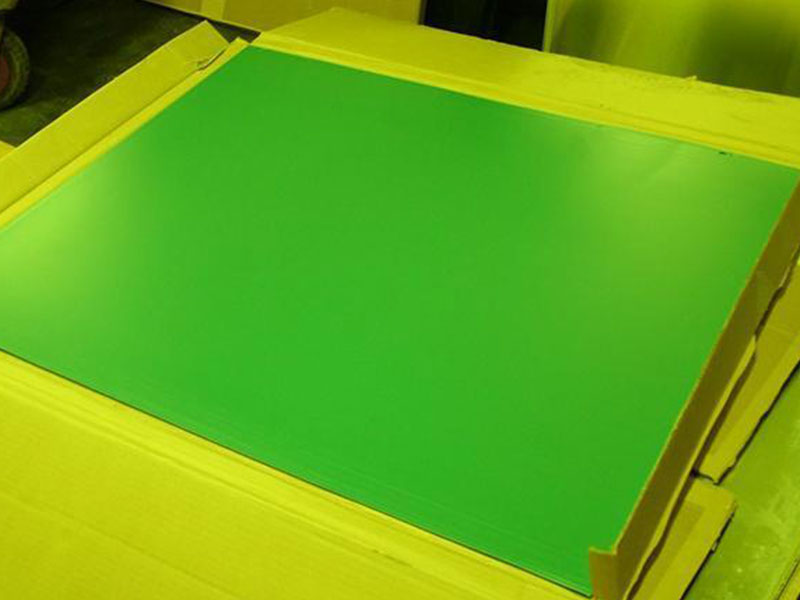
Aluminium CTP Printing Plate Thickness 0.15mm0.30mm
Aluminium CTP Printing Plate Thickness 0.15mm–0.30mm: A Practical Guide for Printers
When printers talk about aluminium CTP (Computer-to-Plate) plates, the conversation almost always circles back to one question: what thickness should we choose? For most commercial and packaging printers, the practical range is between 0.15 mm and 0.30 mm.
Those small numbers hide big differences in handling, stability, cost, and print performance. Looking at these plates only as “thin” or “thick” misses the real story. The more useful way is to see them as engineered materials, where thickness, alloy, temper, grain, and coating work together as a system.
Why Thickness Matters in the Real World
The thickness of an aluminium CTP plate is not just a mechanical parameter; it shapes how your press behaves from prepress to the last sheet.
Typical use patterns:
0.15 mm plates
Often chosen for small to medium presses, short to medium runs, and situations where fast plate changes and low material cost are priorities. They are easier to bend and punch but need more careful handling.0.20–0.24 mm plates
Common for general commercial printing, offering a balanced compromise between rigidity and cost. Many commercial offset presses are optimized around this range.0.25–0.30 mm plates
Favored for high-speed web presses, long-run commercial jobs, and some packaging or book printing where register stability and durability are critical. These plates resist deformation under heavy pressure and long impressions.
In short:
Thinner plates maximize economy and flexibility.
Thicker plates maximize stability and run length.
Alloy and Temper: The Hidden Architecture of the Plate
Behind every CTP plate is an aluminium alloy carefully chosen to respond predictably during graining, anodizing, coating, image recording, and printing.
Most high-quality CTP plates use AA1050, AA1060, AA1070 or similar 1xxx-series alloys. These are “commercially pure” aluminium (> 99.5% Al) with very low alloying additions. Their advantages:
- Excellent chemical stability during processing and printing
- Easy to grain and anodize for strong hydrophilic surfaces
- Good flexibility for bending around plate cylinders
- Predictable behavior in thermal or UV CTP exposure
Tempering is equally important. The typical tempers for CTP plates are:
H18 (full-hard)
High strength, minimal elongation, very stable on press, less prone to stretching. Often used for thicker plates or long-run conditions.H16 / H19 or customized in-between states
Fine-tuned for a balance of stiffness and flexibility, depending on press type and bending requirements.
The combination of 1xxx-series alloy + controlled H-temper ensures that both 0.15 mm and 0.30 mm plates remain dimensionally stable while still being workable in prepress and on press.
Implementation Standards and Process Controls
Reliable CTP plate performance depends on consistent adherence to international and internal standards. While individual manufacturers may use proprietary specifications, the following principles are typical for high-grade aluminium CTP base:
- Base metal chemically compliant with EN, ASTM or GB/T aluminium sheet standards for 1xxx series alloys
- Dimensional tolerances on thickness typically within ±0.005–0.010 mm, with tight flatness control
- Surface grain and roughness (Ra) controlled in a narrow band optimized for ink–water balance and dot reproduction
- Anodic oxide layer thickness controlled for wear resistance and chemical compatibility with the plate coating and developer
On top of the aluminium base, photosensitive or thermal coatings must be uniformly applied and cured. The coating is where imaging happens; the aluminium is the foundation that keeps that imaging stable, job after job.
How Thickness Affects Pressroom Reality
From a practical printing perspective, the move from 0.15 mm to 0.30 mm changes more than plate weight.
Handling and bending:
- Thinner plates are more flexible and easier to curve around small-diameter cylinders, but they demand careful storage and handling to avoid kinks.
- Thicker plates withstand more aggressive manual handling and automated bending equipment, especially in large-format or high-speed environments.
Registration and dimensional stability:
- Thick plates have more resistance to mechanical stress and thermal fluctuations, which supports tighter register on long runs and demanding multi-color work.
- Thin plates are perfectly adequate for shorter runs and moderate speeds, but can be a bit more sensitive to tension and clamping.
Press configuration:
- Some presses are calibrated for specific plate thickness ranges.
A plate that is too thin or too thick relative to the press setting can influence:- blanket pressure
- dot gain
- squeeze and ink transfer
- plate mounting and clamping reliability
This is why many printers standardize on one or two thicknesses across their plant. It simplifies settings, reduces waste, and improves repeatability.
Surface Engineering: Grain, Anodizing and Coating
Regardless of thickness, the aluminium surface must be engineered to interact with water, ink, and chemistry in a very controlled way.
surface processes include:
Electrochemical or mechanical graining
Creates a fine, uniform microtexture. The goal is an even water film in non-image areas and stable ink acceptance in image areas. The exact grain pattern is tuned to work with dot shapes from modern CTP engines.Anodizing
Builds a thin, porous aluminium oxide layer on the surface. This layer:- Improves hydrophilicity in non-image zones
- Protects the plate against abrasion and chemical attack
- Helps anchor the photosensitive or thermal coating
Coating application
Thermal or UV-sensitive polymer coatings are applied in precisely controlled thicknesses. Plate thickness does not change coating formulation, but base stability (more pronounced in 0.25–0.30 mm plates) can give the coating a more consistent imaging platform on high-speed presses.
Typical Chemical Composition of CTP Plate Aluminium
Below is a representative chemical composition range for a 1xxx-series alloy commonly used as a CTP plate substrate. Actual values may vary slightly by supplier but are tightly controlled.
| Element | Symbol | Typical Range (wt%) | Function / Notes |
|---|---|---|---|
| Aluminium | Al | Balance (≈ 99.5–99.8) | Main component, provides base properties |
| Silicon | Si | ≤ 0.25 | Controlled impurity, affects grain and strength |
| Iron | Fe | ≤ 0.40 | Impurity; managed to maintain ductility |
| Copper | Cu | ≤ 0.05 | Limited to preserve corrosion resistance |
| Manganese | Mn | ≤ 0.05 | Trace; minor influence on strength |
| Magnesium | Mg | ≤ 0.05 | Kept low to maintain chemical stability |
| Zinc | Zn | ≤ 0.07 | Trace; controlled for consistency |
| Titanium | Ti | ≤ 0.03 | Sometimes added as grain refiner |
| Others (each) | — | ≤ 0.03 | Individual trace elements |
| Others (total) | — | ≤ 0.10 | Total of all minor trace elements |
This chemically simple but carefully controlled alloy is what allows plates of both 0.15 mm and 0.30 mm to be:
- Stable in developing and gumming solutions
- Resistant to oxidation and staining
- Consistent across batches and thicknesses
Matching 0.15–0.30 mm Plates to Your Jobs
In practice, choosing the right thickness is about aligning material behavior with job demands:
Prefer 0.15–0.20 mm when:
- You run frequent job changes and relatively short runs
- Your press uses smaller plate sizes and moderate speeds
- Plate economy and fast handling are more important than extreme run length
Prefer 0.25–0.30 mm when:
- You run long jobs, web presses, or heavy stock at high speeds
- Registration demands are very strict
- Plates are subjected to frequent wash-ups or abrasive inks and stocks
What stays constant across this range is the underlying engineered aluminium: a high-purity 1xxx-series alloy, optimized temper, controlled surface grain, and a durable anodic layer, all designed to support modern CTP imaging.
Final Thought
Aluminium CTP plates in 0.15–0.30 mm thickness are more than simple metal sheets with coating. They are precision-engineered printing tools, where chemistry, metallurgy, and surface science converge.
By how thickness interacts with alloy, temper, surface treatment, and press conditions, you can make smarter plate choices, reduce waste, and stabilize your print quality across the full range of commercial and packaging applications.
https://www.al-sale.com/a/aluminium-ctp-printing-plate-thickness-015mm030mm.html