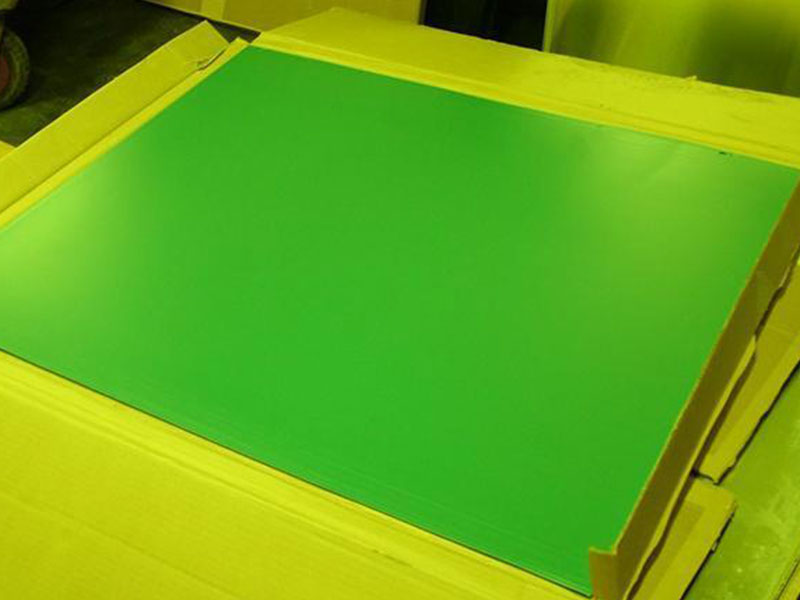
Aluminum printing plate ctcp offset thermal uv ctp plate
Aluminum Printing Plate CTCP Offset Thermal UV CTP Plate – A Metallurgist’s View Inside the Image
Instead of starting with imaging technology, it helps to reverse the perspective: imagine the plate as an engineered aluminum substrate first, and a graphic prepress tool second. Once we understand what the alloy is doing under the coating, CTCP, thermal, and UV CTP behaviors suddenly become much more predictable.
Why the Alloy Core Matters More Than Most Think
For commercial printers, the everyday language is “CTCP plate,” “thermal CTP plate,” or “UV CTP plate.” In the factory, the discussion begins with AA1050, AA1050A, AA1060, AA1070 or similar non-heat-treatable alloys. These high-purity aluminum grades are chosen not just for economics, but for:
- High reflectivity and uniform interaction with laser or UV exposure
- Excellent anodizing response to create a robust micro-porous oxide
- Consistent grain structure that stabilizes dot shape and plate wear
From a metallurgical perspective, the “quiet hero” of a stable plate is grain size and distribution along the rolling direction. Controlled cold-rolling and annealing create a homogeneous, fine-grained structure. This fine grain microstructure supports:
- Even electrochemical behavior during anodizing
- Reduced risk of pinholes and micro-cracks
- Predictable hydrophilic behavior of the non-image area
This is why a high-quality aluminum CTP plate behaves differently from a lower-grade plate long before any laser touches it.
Alloy Tempering: The Hidden Variable Behind Run Length
The temper designation, often seen as H18 or H19 for CTP plates, describes how the sheet was work-hardened and partially annealed. That temper is not a trivial code; it directly translates into mechanical stability on press.
Common substrate choices for CTCP, offset thermal, and UV CTP plates include:
- Alloy series: 1xxx (e.g., AA1050, AA1050A, AA1060, AA1070)
- Typical temper: H18, H19 (full-hard or extra hard, cold-rolled)
- Thickness range: approximately 0.15–0.30 mm for commercial offset, with specialty plates slightly outside this range as needed
A harder temper provides:
- Better dimensional stability during high-speed offset printing
- Greater resistance to scratching and mechanical damage during mounting
- Increased run length, especially for abrasive stocks or UV-curable inks
However, extremely hard temper without careful grain control can make the plate susceptible to micro-cracking during repeated bending in the plate clamp area. That is where precise rolling schedules and finishing anneals become crucial.
Surface Topography: Roughness as an Engineered Parameter
From the outside, all plates feel similar. Under a profilometer and SEM, CTCP, thermal, and UV CTP plates reveal a finely tuned topography.
Electro-graining and brushing are used to create a consistent micro-roughness, often targeted around:
- Roughness Ra typically in the 0.25–0.55 μm range
- Roughness Rz carefully controlled to balance ink-water management and coating anchorage
This texture provides:
- Mechanical keying points for the light-sensitive or photopolymer coating
- Micro-reservoirs for fountain solution in the non-image area
- Support for crisp halftone reproduction, especially in 175–300 lpi ranges and FM screening
The “CTCP” part of a conventional plate (Computer-To-Conventional-Plate) depends heavily on how consistently that surface interacts with violet or UV lasers through the applied coating. Uneven graining means uneven exposure latitude.
A Metallurgical Approach to CTCP vs Thermal vs UV CTP
Thinking in terms of metal and chemistry, we can characterize the plate families in a distinctive way.
CTCP conventional plate (often processed with violet laser imaging on conventional plate chemistry):
- Requires a substrate that tolerates alkali developers without excessive attack on the aluminum
- Needs robust adhesion of the photosensitive layer to prevent coating lift-off
- Benefits from slightly more robust oxide and graining to handle traditional chemistry and gum processes
Thermal CTP plate:
- Works with infrared (usually 830 nm range) laser exposure
- Imaging layer is often based on thermal crosslinking or polymerization chemistry that demands very uniform heat conduction and dissipation through the aluminum
- The high-purity aluminum substrate helps distribute localized thermal loads, protecting the fine dots and maintaining dimensional accuracy under intense exposure energy
UV CTP plate:
- Uses UV or violet laser (around 405 nm) exposure
- Requires a substrate and oxide layer that can resist both UV-curable inks and more aggressive press chemistry, particularly in packaging and label applications
- Often needs slightly higher corrosion resistance and more stable hydrophilic behavior in the non-image area
Behind all of these, the same alloy family and temper are at work, but subtle refinements in oxide growth, roughness profile, and surface chemistry tailoring create the performance differences that printers experience on press.
Implementation Standards: Where Metallurgy Meets Print Consistency
Reliable aluminum CTP plates align with multiple standards simultaneously. From a production point of view, quality systems and chemical regulations are not optional add-ons; they are part of controlling alloy purity, coating adhesion, and print stability.
Commonly referenced frameworks and practices include:
- ISO-based quality and environmental management (frequently ISO 9001 and ISO 14001 in plate manufacturing plants)
- RoHS and REACH-compliant formulations for coating and processing chemistry, minimizing heavy metals and harmful substances
- Tight internal specifications for flatness, edge wave, and thickness tolerance to ensure automated plate loading and perfect cylinder wrapping
Dimensional tolerances are often held to:
- Thickness variation typically within ±0.005–0.01 mm depending on gauge
- Flatness and camber controlled so plates feed reliably through CTP units and plate benders without image distortion
For the press operator, this expresses itself as repeatable registration and consistent dot gain rather than visible “standards compliance” labels.
Chemical Properties and Surface Chemistry: The Real Dialogue with Ink and Water
While pure aluminum is chemically reactive, anodizing transforms the surface into a durable aluminum oxide (Al₂O₃) layer that becomes the functional interface between the plate, developer, gum, fountain solution, and ink.
A simplified table of chemical and physical parameters for a typical aluminum CTP plate substrate (AA1050 / AA1050A base) is shown below. Values are indicative ranges, as exact figures vary by manufacturer and application.
| Property | Typical Value / Range | Relevance to CTCP / Thermal / UV CTP Performance |
|---|---|---|
| Alloy designation | AA1050 / AA1050A / AA1060 / AA1070 | High-purity, non-heat-treatable alloy for consistent anodizing |
| Al content (mass %) | ≥ 99.5 | Reduces inclusions, stabilizes oxide growth and surface uniformity |
| Si + Fe total (mass %) | ≤ 0.40 | Controls intermetallics; excessive levels affect graining quality |
| Cu (mass %) | ≤ 0.05 | Limits galvanic activity, improves corrosion resistance |
| Mn (mass %) | ≤ 0.05 | Minimizes unwanted strengthening phases that disturb anodizing |
| Mg, Zn, Ti (each, mass %) | ≤ 0.05 | Maintains soft, uniform substrate for stable coating adhesion |
| Temper | H18 / H19 | Full-hard/extra-hard for dimensional stability and run length |
| Tensile strength (Rm) | ~110–150 MPa | Sufficient strength for clamping and high-speed running |
| 0.2% yield strength (Rp0.2) | ~80–130 MPa | Resistance to permanent deformation in plate clamp and bending |
| Elongation (A50) | ~2–8 % | Prevents brittle failure during bending and handling |
| Density | ~2.70 g/cm³ | Predictable plate weight and handling in automation |
| Thermal conductivity | ~230 W/m·K | Rapid heat dissipation in thermal CTP exposure |
| Electrical conductivity | ~60 % IACS | Influences electro-graining and anodizing uniformity |
| Natural oxide film thickness | 2–4 nm (as-rolled) | Base layer later amplified by anodizing |
| Anodic oxide thickness | Typically 0.3–2.5 μm, application-dependent | Governs abrasion resistance and hydrophilic layer anchoring |
| Surface roughness Ra (grained) | ~0.25–0.55 μm | Balances water retention, coating anchorage, and dot sharpness |
| pH resistance (non-image area) | Stable typically from pH 4–9 (with proper gum) | Determines fountain solution compatibility and anti-corrosion |
| Corrosion behavior | Forms stable Al₂O₃ passive film | to non-image durability and long press runs |
This chemistry-centric view explains why two plates that appear identical to the eye may perform very differently on press. A subtle shift in impurity content, oxide uniformity, or grain structure changes how the plate reacts to developers, fountain solutions, and inks.
Imaging Layer and Substrate Symbiosis
The imaging layer on a CTCP, thermal, or UV CTP plate is designed to respond to a specific wavelength range and energy dose. Its adhesion, resolution, and process latitude depend heavily on the aluminum beneath it.
For CTCP offset plates:
- The conventional photosensitive layer (typically diazo or photopolymer-based) requires an anodized surface with micro-pores and controlled hydrophilicity.
- Any variation in oxide pore size or contamination in the aluminum can lead to random spots, coating lift-off, or uneven exposure response.
For thermal CTP plates:
- The coating is designed to undergo thermal crosslinking, polymerization, or ablation at specific energy thresholds.
- Heat conduction through the aluminum must be uniform. Localized variations in alloy composition or temper could cause inconsistent dot formation, particularly in fine screens and FM screening.
For UV CTP plates:
- The photopolymer system responds to violet/UV energy, so the interface between coating and aluminum must remain stable under wavelengths and energies that can also influence oxide chemistry over time.
- Strong adhesion to the anodized aluminum is crucial to withstand UV-curable inks and the associated wash-up solutions.
In each case, the aluminum is not merely a backing; it is an active engineering element that supports, shapes, and protects the imaging chemistry.
From Microstructure to Macroscopic Press Performance
Linking metallurgical details directly to daily print outcomes provides a distinctive way to evaluate CTCP and CTP plates:
- Grain size and uniformity govern consistent anodizing, which in turn controls dot sharpness and resistance to blinding.
- Temper (H18, H19) affects run length and resistance to plate bending fatigue, influencing how often plates need replacement.
- Surface chemistry and oxide thickness define fountain solution latitude, making the difference between a stable water window and a constant battle with scumming.
- Impurity control within the alloy reduces random defects that can manifest as small voids, pinholes, or premature background toning.
By evaluating a plate not only as a “CTCP” or “thermal” product but as a carefully engineered aluminum system, printers gain a deeper of why certain plates deliver superior consistency, easier make-ready, and longer press life.
Choosing Aluminum Plates with Metallurgical Awareness
When selecting aluminum printing plates for CTCP, offset thermal, or UV CTP workflows, the questions to ask go beyond coating type and imaging wavelength:
- What alloy series and temper are being used, and how tightly are they controlled?
- How is the electro-graining and anodizing process monitored to maintain consistent Ra, oxide thickness, and hydrophilicity?
- Which internal standards, in addition to ISO, RoHS, and REACH, guide the control of inclusions, flatness, and thickness tolerance?
For high-quality commercial, packaging, and publication printing, the aluminum substrate is the quiet foundation of predictable color, fast makeready, and long, trouble-free runs.
aluminum CTP plates from a metallurgical and chemical perspective not only supports better SEO-friendly comparisons of CTCP, thermal, and UV CTP plates, it also arms pressrooms and prepress departments with the insight needed to match the right plate to the right job—based not on claims, but on the engineered behavior of alloy, temper, and surface chemistry working together.
https://www.al-sale.com/a/aluminum-printing-plate-ctcp-offset-thermal-uv-ctp-plate.html