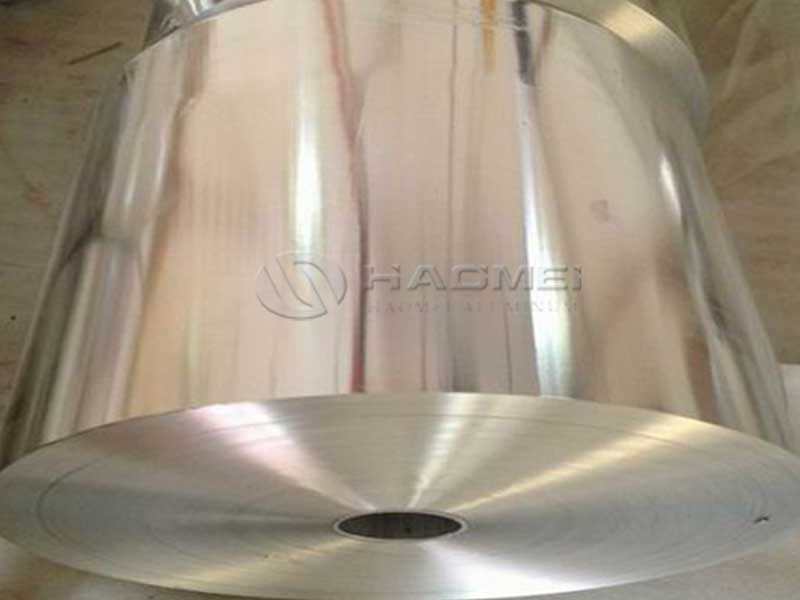
Carbon coated lithium ion battery aluminum foil
Carbon Coated Lithium-Ion Battery Aluminum Foil: The "Quiet Interface" That Makes Cells More Reliable
In a lithium-ion battery, breakthroughs rarely come only from eye-catching active materials. Many of the real gains in yield, consistency, fast charge, and cycle life come from the interfaces-those thin, often overlooked layers where electrons and ions negotiate passage. Carbon coated lithium-ion battery aluminum foil is one of those "quiet" upgrades: it keeps the familiar aluminum current collector, but adds a functional carbon coating that transforms how the cathode layer is built, how it ages, and how it behaves under stress.
From a practical manufacturing viewpoint, carbon coated aluminum foil is less about changing the chemistry of the cell and more about stabilizing the physics of contact: lowering interfacial resistance, improving adhesion, and reducing defect sensitivity during high-speed coating and calendering. That makes it especially valuable as cathode formulations trend toward higher loading, higher voltage, and more demanding production throughput.
What It Is, Structurally
Carbon coated battery foil typically consists of:
- A high-purity aluminum foil substrate (the current collector for the cathode)
- A thin carbon-based conductive coating on one or both sides, often containing conductive carbon (acetylene black, carbon black, graphite, CNT blends) dispersed in a polymeric binder system
- Optional additives that tune surface energy, wettability, or adhesion
Think of the coating as a controlled "electrical primer." Instead of forcing the cathode slurry to make intimate contact with a relatively smooth metal oxide surface layer on aluminum, the cathode bonds onto a porous, conductive carbon network that is easier to wet, easier to anchor, and more forgiving during drying and compression.
Lower and more stable contact resistance
Bare aluminum is conductive, but the real interface includes native oxide and micro-scale surface irregularities. Carbon coating creates a uniform conductive interlayer that reduces contact resistance and helps keep it stable after cycling, thermal exposure, and calendering.
Better adhesion and reduced delamination risk
High-energy cathodes and thick electrodes push binders to their limits. Carbon coated foil improves mechanical interlocking and chemical affinity between the collector and the cathode film. This is particularly useful when pushing high areal capacities or using water-based processing where adhesion can be more sensitive.
Improved coating quality at high line speed
Coating defects often originate from poor wettability, pinholes, shrinkage stress, and uneven drying. Carbon coating can improve wettability and slurry leveling, supporting more uniform electrode density and reducing scrap rates.
Enhanced high-rate performance and cold-temperature behavior
By reducing interfacial impedance, carbon coated foil helps electrons move into the cathode layer more efficiently. This can translate into better power performance and less polarization, especially in cold conditions where kinetics slow down.
A subtle safety contribution
While it is not a "safety device" by itself, better adhesion and lower localized resistance reduce the chance of hot spots caused by micro-delamination or current constriction. In demanding packs, small reductions in localized heating matter.
Where It's Used: Applications That Benefit Most
Carbon coated aluminum foil is widely used as a cathode current collector in:
- Power batteries for EVs and PHEVs, where cycle life, low resistance, and fast charge consistency are crucial
- Energy storage systems, where uniformity and long calendar life are emphasized
- High-rate consumer electronics (power tools, drones), where impedance control and thermal stability are valued
- High-voltage cathode systems, including NMC, NCA, LMFP, and certain spinel formulations, where interface quality becomes more critical as voltage stress increases
It can also support next-generation directions like thicker electrodes and reduced binder content, because the collector interface is less likely to be the weak link.
Typical Product Parameters (Industry-Common Ranges)
Actual specifications vary by supplier and cell design, but customers commonly evaluate the following:
Aluminum foil thickness
- Common: 12 µm, 15 µm, 16 µm, 18 µm, 20 µm
- Thinner foils reduce weight, thicker foils improve handling and tear resistance
Carbon coating thickness (single side)
- Typical: 0.5–2.0 µm
- Balanced to ensure conductivity without sacrificing energy density
Coating weight (single side)
- Typical: 0.2–1.0 g/m²
Surface resistivity (coated surface)
- Typical: ≤ 50–200 Ω/□ depending on formulation and thickness
Peel strength (cathode to collector)
- Typical target: ≥ 0.8–2.0 N/cm (method-dependent)
Tensile strength and elongation
- Controlled mainly by alloy/temper; critical for slitting, winding, and high-speed processing
Cleanliness and defect control
- Pinholes, gels, streaks, and particulate are managed tightly because they amplify downstream coating defects
These numbers should always be aligned with the electrode recipe, coating speed, and calendering pressure used in your line-carbon coating is an interface solution, so it must be specified like an interface.
Alloy, Temper, and Why They Matter
Battery aluminum foil substrates commonly use high-purity or battery-specific alloys to ensure conductivity, formability, and corrosion resistance in electrolyte.
Common alloy choices
- 1235 (high purity, widely used)
- 1050, 1060 (good conductivity and ductility)
- 1070/1085 (higher purity options for demanding applications)
Typical tempers
- O (annealed): excellent ductility, good for forming; may be softer during high-speed handling
- H18 (full hard): higher strength and dimensional stability; often preferred for thin gauges and precise slitting
- H14/H16: intermediate hardness options depending on equipment and yield targets
Selecting temper is less about "stronger is better" and more about matching your winding tension, die conditions, and slitting capability while maintaining a stable electrode coat weight and avoiding wrinkles.
Implementation Standards and Quality Expectations
Battery foil and coated current collectors are typically supplied under a combination of internal enterprise standards and recognized test methods. In practice, buyers look for consistency with:
- ASTM E345 (tension testing of metallic foil) or equivalent tensile methods
- ASTM B479/B479M (aluminum foil general requirements, where applicable)
- RoHS and REACH compliance for restricted substances
- Supplier-defined coating tests for surface resistivity, adhesion, and solvent residue
- Cleanliness and defect inspection standards aligned with battery manufacturing requirements
Because the carbon layer is functional, incoming inspection often includes coating uniformity, surface resistivity mapping, and peel/adhesion testing under the customer's own cathode formulation.
Chemical Properties Snapshot (Representative)
Values depend on alloy grade; the table below shows common composition limits for AA1235 (typical reference for battery foil substrates). Always confirm with mill certificates.
| Element | Typical Limit / Range (wt%) | Role / Notes |
|---|---|---|
| Al | ≥ 99.35 | High conductivity, stable collector base |
| Si | ≤ 0.65 | Impurity control; affects formability |
| Fe | ≤ 0.65 | Impurity control; influences strength and pinhole tendency |
| Cu | ≤ 0.05 | Kept low for corrosion behavior |
| Mn | ≤ 0.05 | Minor impurity |
| Mg | ≤ 0.05 | Minor impurity |
| Zn | ≤ 0.10 | Minor impurity |
| Ti | ≤ 0.06 | Grain/refinement effects in some cases |
| Others (each) | ≤ 0.03 | Controlled for consistency |
| Others (total) | ≤ 0.10 | Overall impurity cap |
For coated foil, the coating is typically carbon + binder; suppliers may also specify ash content, volatile residue, and ionic contamination (e.g., Na/K/Cl) because trace ions can influence cell stability.
The Distinctive View: Carbon Coated Foil as a "Process Insurance Layer"
A useful way to evaluate carbon coated aluminum foil is not only by conductivity, but by how it reduces sensitivity in your production window. Many cell factories discover that when they push higher loading or faster drying, bare foil turns small fluctuations into defects. Carbon coating acts like a buffer: it smooths the interface, improves bonding, and helps electrodes survive the mechanical reality of roll-to-roll manufacturing.
So the real question to ask is not "Is it more conductive?" but "Does it keep my electrode interface consistent when conditions vary?" If the answer is yes, carbon coated lithium-ion battery aluminum foil becomes a direct lever for higher yield, more stable impedance, and more predictable battery performance-exactly the outcomes that matter in commercial cell manufacturing.
https://www.al-sale.com/a/carbon-coated-lithium-ion-battery-aluminum-foil.html