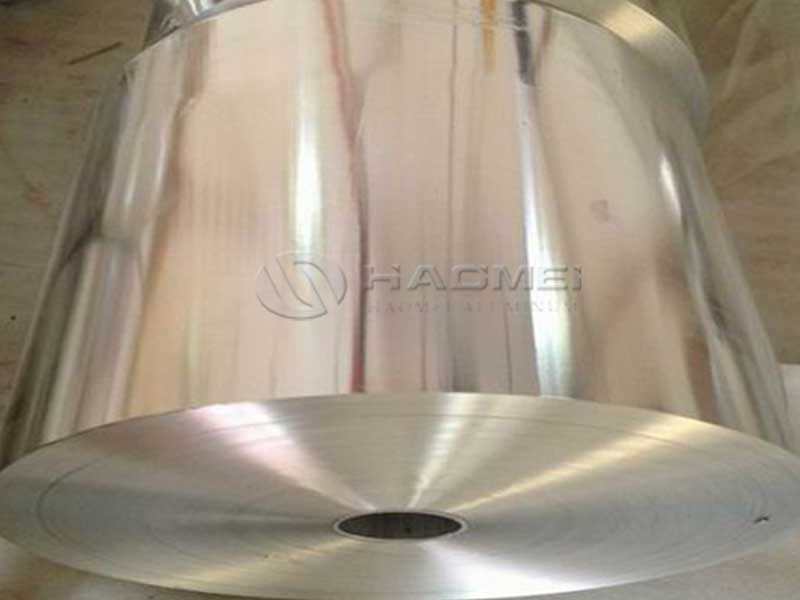
Aluminum foil stacked fin heat sink
Aluminum Foil Stacked Fin Heat Sink: A Flexible Architecture for Modern Thermal Design
In most design reviews, heat sinks are treated as fixed geometry: cut, machined, extruded, maybe bonded. The aluminum foil stacked fin heat sink breaks that assumption. Instead of being a single solid body, it is a layered architecture—hundreds of ultra-thin aluminum foils stacked or louvered into a dense forest of fins, then fixed together by brazing, diffusion bonding, or high-reliability adhesives.
From a distance it looks like any other finned block. Up close, it behaves more like a metallic origami: large surface area, tunable airflow behavior, and a structure that can be tailored almost continuously rather than carved from a monolithic billet.
Below, we will look at this technology not as a commodity part, but as a modular thermal platform that trades mass for controllable micro-geometry, enabling performance that conventional heat sinks struggle to match at low to medium air velocities.
The Architecture: Surface Area as a Design Primitive
In an aluminum foil stacked fin heat sink, the primary design variable is not just fin thickness or spacing; it is the local airflow behavior between very thin foils and the resulting heat transfer coefficient. Typical foil thickness ranges from about 0.05 to 0.3 mm, far thinner than the fins of extruded or machined sinks.
This extremely low fin thickness allows:
- A higher fin density (more fins per unit width)
- A much larger wetted surface area for the same volume
- Reduced thermal resistance at modest pressure drops
Where an extruded sink might have a fin pitch of 2–4 mm, foil stacks can easily go below 1 mm while still controlling pressure drop with louver patterns, offset fin segments, or tapered geometries.
Instead of choosing a single fin profile and locking it in for the entire component, engineers can vary foil shape in zones: denser in hot spots, more open where pressure drop is critical, or with micro-louvers for enhanced turbulence at specific regions of airflow.
The heat sink becomes less of a passive block and more of a flow-sculpting element that interacts deliberately with the cooling air.
Material and Temper: Why Aluminum Foil Behaves Differently
The thin foil format amplifies the role of alloy choice and temper. In stacked fin designs, you are not simply picking “aluminum”; you are choosing a combination of thermal conductivity, formability, strength at brazing temperature, and post-braze stability.
Common alloy/temper families for foil fins:
- 1xxx series (e.g., 1100-O): very high conductivity, excellent formability, relatively soft
- 3xxx series (e.g., 3003-H14 or 3003-O): good compromise of conductivity, strength, and brazeability
- 6xxx series are less common for ultra-thin foil due to forming limits at small thicknesses
A representative properties comparison at room temperature:
| Alloy (Typical Temper) | Approx. Thermal Conductivity (W/m·K) | Yield Strength (MPa) | Elongation (%) | Typical Use in Foil Fins |
|---|---|---|---|---|
| 1100-O | 220–230 | 35–45 | 25–35 | Maximum conductivity, low stress areas |
| 3003-O | 190–200 | 45–55 | 20–30 | Good brazeability, general-purpose fins |
| 3003-H14 | 185–195 | 90–110 | 10–20 | Higher rigidity, better handling before forming |
| 8011-O / 8006-O* | 150–180 | 45–70 | 20–30 | Specialized foil alloys, good for deep forming |
* 8xxx series appear in some specialized foil products and can be used where specific forming and strength balances are desired.
Temper selection is a balancing act. Softer tempers like O are easier to form into complex louvered shapes without cracking and can conform well in brazing fixtures. Harder tempers like H14 help maintain fin straightness and stiffness during assembly and handling but must be managed carefully during brazing or high-temperature bonding to avoid excessive softening.
Because foil is so thin, even modest alloying additions or temper changes can significantly alter forming limits, springback, and vibration resistance. In other words, metallurgy matters more here than in a heavy extruded block.
Joining Methods: The Hidden Engine of Reliability
Stacked fin heat sinks are only as good as their joints. Between the baseplate and foil, and foil-to-foil (in some designs), the bonding method determines both thermal path efficiency and long-term mechanical integrity.
joining approaches include:
- Controlled-atmosphere brazing (CAB): Common with 3xxx-series fins on 3xxx or 6xxx bases using a cladding layer. It yields a metallic bond with excellent thermal contact and good fatigue resistance.
- Vacuum brazing: Favored where flux-free joints, cleaner surfaces, or higher integrity are required (e.g., aerospace, high-reliability power electronics).
- Diffusion bonding or solid-state processes: Used in niche high-end applications needing extremely clean interfaces or unusual laminate geometries.
- High-conductivity adhesives: Acceptable for lower-power, cost-sensitive designs, but with a higher thermal interface resistance and more concern over aging and outgassing.
Flow Behavior: Turning Laminar Constraints into a Design Tool
In conventional sinks with thicker fins, pushing performance usually means cranking up air velocity or resorting to forced turbulence using fans or blower geometries. In foil stacks, you can instead manipulate micro-geometry to shape the flow field inside the fin array.
By using offset strip fins, punched louvers, or staggered tabs in the foil, designers can:
- Promote local turbulence at relatively low bulk velocities
- Disrupt thermal boundary layers repeatedly along the airflow path
- Redistribute flow to reach areas that would otherwise stagnate
This is especially valuable in applications where fan power is constrained or where noise limits airflow—such as telecom base stations, avionics, and medical equipment. The heat sink becomes a passive turbulence generator that works with the given airflow instead of depending on brute-force cooling.
Moreover, stacked foil fins can be oriented or tuned for specific flow regimes:
- For predominantly natural convection, taller and more open fin patterns with minimal flow obstruction maintain buoyancy-driven currents.
- For moderate forced convection, fine-pitch louvered designs dramatically increase the effective heat transfer coefficient without huge pressure penalty.
The flexibility to adapt the fin field for the actual flow conditions is the quiet superpower of foil-based architecture.
Applications: Where Foil Stacked Fins Earn Their Keep
These heat sinks excel where space, weight, or airflow are constrained, and where thermal margins are tight. Representative applications include:
Power electronics modules: In EV inverters, DC–DC converters, and high-density industrial drives, foil stacks manage hotspot-laden baseplates with limited vertical clearance. The baseplate can be machined or cast from 6061-T6 or 6082, with 3003-O foil fins brazed on top, delivering low junction-to-air resistance with modest fan power.
RF and telecom hardware: Base station radios, microwave amplifiers, and outdoor enclosures often face fan power limits, dust exposure, and strict weight ceilings. Thin foil fins unlock large surface areas with tailored profiles to direct airflow from small, quiet blowers.
Avionics and aerospace: Weight-critical designs use foil stacks both as stand-alone air-cooled sinks and as air-side structures bonded to liquid-cooled cold plates. The foil architecture can be shaped to meet harsh vibration profiles using stronger tempers and carefully designed joint lines.
LED lighting and laser modules: Compact, high-brightness sources benefit from foil arrays that fit within slim housings while maintaining low thermal resistance. These are often paired with specialized aluminum alloys optimized for optical module integration.
HVAC, fuel cell, and battery modules: Foil stacked fins blur the boundary between “heat sink” and “heat exchanger,” especially where bidirectional heat flow or multi-fluid interfaces exist. In such cases, the array acts as both a structural and thermal interface, sometimes combining air and liquid paths in a laminated assembly.
In many of these environments, robustness under thermal cycling, moisture, and vibration is as important as raw thermal performance. Here, the careful choice of alloy, temper, and brazing schedule ensures the stack does not warp, crack, or fatigue prematurely.
Design Considerations: Beyond Simple Thermal Resistance
Evaluating an aluminum foil stacked fin heat sink means thinking beyond a single “°C/W” figure. A distinctive, more realistic viewpoint treats the heat sink as a system that simultaneously:
- Trades fin density against pressure drop and noise
- Uses alloy and temper to tune mechanical damping and impact resistance
- Embeds manufacturing constraints (foil handling, forming limits, brazing distortion) into the design rules
- Anticipates environmental exposure: corrosion, condensation, and particulate fouling
For example, a high-fin-density design might achieve spectacular initial performance in clean lab air but foul quickly in dusty industrial settings. In such cases, slightly thicker foils with a more open pitch and a corrosion-resistant alloy or conversion coating (e.g., chromate-free trivalent passivation or hard anodizing on the base) will deliver more stable performance over the product lifetime.
Similarly, for a design subject to severe thermal cycling, an alloy/temper combination with moderate strength but high ductility will accommodate differential expansion between baseplate and fins, reducing the risk of crack initiation at brazed joints.
In this framework, foil stacked fin systems are not just “better heat sinks”; they are tunable thermal structures that must be co-designed with airflow, environment, and reliability targets.
Traditional aluminum heat sinks are like carved stone: strong, familiar, and static. Aluminum foil stacked fin heat sinks are closer to engineered fabric—woven from thin metallic layers, shaped by local geometry and process, and tailored for specific flows and constraints.
Their value emerges when designers embrace this fabric-like nature, using alloy selection, temper control, fin micro-geometry, and joining techniques not as afterthoughts but as active design levers.
Viewed this way, the stacked foil heat sink is not simply a way to pack more fins into the same space; it is a flexible thermal architecture that turns aluminum into a precisely tuned interface between electronics and air, optimized for the real operating world rather than idealized lab conditions.
https://www.al-sale.com/a/aluminum-foil-stacked-fin-heat-sink.html