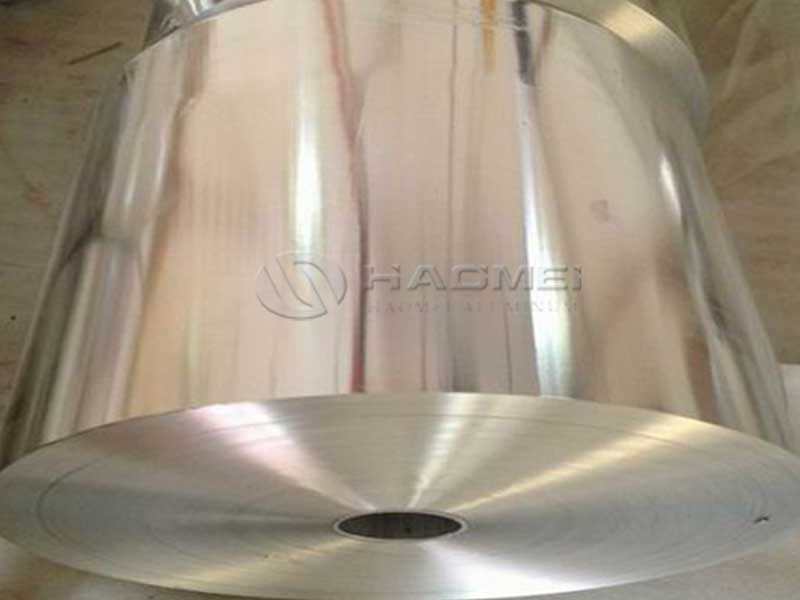
Aluminum Foil for 8011 O
Aluminum Foil for 8011 O: A Practical Guide from the User’s Side
Aluminum foil made from alloy 8011 in temper O is one of those quiet materials that keeps entire production lines running smoothly while staying invisible to end consumers. Instead of looking at it only as a code on a datasheet, it’s more useful to see 8011 O foil as a “flexible barrier system” that combines formability, clean chemistry, and stable performance in harsh real‑world conditions.
Below is a concise, technical‑but‑readable overview designed for buyers, process engineers, and product developers who need to choose and specify 8011 O foil quickly and confidently.
What “8011 O” Really Means in Practice
The designation “8011 O” describes two things at once:
- 8011: a wrought aluminum alloy with iron and silicon as the main alloying elements, optimized for foil production and deep forming.
- O temper: fully annealed, soft condition, giving maximum ductility and formability.
In everyday production terms, this means:
- The metal is soft enough to be deeply drawn, folded, crimped, or heat‑sealed without cracking.
- It still keeps enough strength to hold its shape in blisters, closures, multilayer laminates, and container lids.
- It can be rolled to very thin gauges while maintaining good pinhole resistance and a clean surface.
Where 8011 O is used, the typical performance priority is “formability + barrier” rather than high mechanical strength.
Core Functions of 8011 O Aluminum Foil
Think of 8011 O foil as solving three basic jobs at once:
Barrier protection
It provides an almost complete barrier to light, oxygen, moisture, aroma, and many chemicals when used at appropriate thickness and with proper surface treatment. This is critical for:
- Pharmaceutical blisters and strip packs
- Food and beverage seals and lids
- Cosmetic and personal care packaging
- Technical laminates that must block moisture or gases
Formability and processing flexibility
The O temper lets the foil:
- Deep draw without tearing in semi‑rigid foil containers
- Emboss without losing integrity
- Fold and seal tightly around complicated shapes
- Laminate smoothly with paper, plastic films, or coatings
Sustainability and recyclability
Unlike composite materials with complex multi‑layer extrusions, plain or simply laminated 8011 O foil remains:
- Fully recyclable as aluminum scrap
- Suitable for closed‑loop recovery in many industrial settings
- Attractive to brands seeking lighter packaging with lower environmental impact than mixed material systems
Where 8011 O Foil Shows Up in the Real World
Instead of listing industries, it can be more helpful to match typical “problems” with what 8011 O foil actually does.
Keeping medicine stable
In pharmaceutical blisters, strip packs, and sachets, 8011 O foil acts as a micro‑climate manager. The foil blocks light and moisture so that sensitive active ingredients stay within their specified potency over shelf life. Its soft temper allows precise forming over blister cavities without micro‑cracks, which might otherwise compromise barrier properties.
Protecting food flavor and safety
For yogurt lids, instant noodle lids, pet food trays, and retortable pouches, 8011 O foil:
- Preserves taste and aroma by stopping oxygen and off‑odors
- Resists sterilization and retort temperatures when correctly lacquered or laminated
- Tears cleanly when consumers peel or open, improving user experience
Supporting heat and cooking applications
Household and catering foils based on 8011 O benefit from:
- Good thermal conductivity for even heating
- Adequate strength even in thin gauges for wrapping, grilling, and baking
- Ease of forming into trays or multi‑compartment containers
Sealing and lining closures
In bottle neck seals, induction liners, and peelable membranes, 8011 O foil works as:
- A sealing surface for heat or induction bonding
- A tamper‑evident and hygienic barrier
- A printable area for brand and regulatory information
Technical and industrial laminates
In building materials, insulation, cables, and specialty wraps, 8011 O foil provides:
- Reflective thermal and radiant barriers
- EMI/RFI shielding when used in composites
- Corrosion‑resistant surfaces in HVAC and pipe insulation systems
Typical Parameters for 8011 O Foil
Actual values depend on thickness, supplier, and specific standard, but the following ranges give realistic expectations for commercial 8011 O foil:
Thickness range
- Commonly from about 0.005 mm to 0.03 mm for packaging and household applications
- Up to about 0.05–0.08 mm for heavy‑duty containers and industrial uses
Width range
- From narrow slits around 200 mm
- Up to jumbo rolls exceeding 1,600 mm, depending on mill capability
Mechanical properties (typical, not guaranteed values)
- Tensile strength (Rm): roughly 60–120 MPa in O temper, gauge dependent
- Yield strength (Rp0.2): roughly 20–50 MPa
- Elongation (A50): commonly 10–20 % and higher for thicker gauges
Physical properties
- Density: approximately 2.7 g/cm³
- Melting point: around 660 °C
- Thermal conductivity: roughly 200–235 W/m·K
- Electrical conductivity: about 30–40 % IACS (International Annealed Copper Standard)
Surface options
- Mill finish, bright, or matte
- One side bright / one side dull (due to double‑rolling process)
- Degreased, chemically treated, chromate‑free conversion, or primer‑coated
- Lacquered (heat‑seal, protective, or printable coatings)
- Laminated with paper, film, or nonwovens
Alloy Chemistry: 8011 O Composition Table
Typical chemical composition limits for alloy 8011 (mass %, based on common standards such as EN and GB; exact limits may vary slightly by standard and producer):
| Element | Typical Range (wt. %) |
|---|---|
| Si | 0.50 – 0.90 |
| Fe | 0.60 – 1.00 |
| Cu | ≤ 0.10 |
| Mn | ≤ 0.20 |
| Mg | ≤ 0.10 |
| Cr | ≤ 0.05 |
| Ni | ≤ 0.10 |
| Zn | ≤ 0.10 |
| Ti | ≤ 0.08 |
| Others (each) | ≤ 0.05 |
| Others (total) | ≤ 0.15 |
| Al | Balance |
This chemistry is tuned to optimize foil rolling behavior, annealing response, and final pinhole resistance, while maintaining good corrosion resistance and stable mechanical properties in thin gauges.
How Temper O Influences Performance
In aluminum foil, the temper often matters more than the alloy number. For 8011 O:
Softness and deep draw
O temper means fully annealed, so internal stresses are relieved. This makes the foil:
- Less springy, easier to shape and keep in form
- Resistant to cracking when folded tightly or drawn into deep pockets
Heat behavior
O temper responds predictably to downstream heat processes such as:
- Lacquer curing
- Retort sterilization
- Induction sealing
Because it starts soft, any hardening due to process heat is limited, and there is less risk of embrittlement compared with harder tempers.
Seal integrity
In heat‑seal applications, a compliant foil substrate helps:
- Adapt to minor surface irregularities of containers
- Generate better contact and seal strength with coatings or laminates
- Reduce micro‑leak paths that could compromise barrier performance
Implementation Standards and Compliance
Aluminum foil 8011 O is generally manufactured and supplied according to recognized standards and application‑specific requirements. Typical references include:
- EN, ASTM, GB, or equivalent national standards for wrought aluminum and foil
- Food‑contact regulations such as FDA (US), EU food contact framework, and relevant national regulations for coatings and inks
- Pharmaceutical standards and guidelines for blister and strip packaging, including migration and extractables testing through validated coatings or laminates
- ISO‑based quality management systems (for example ISO 9001) for traceability and process control
For critical uses like pharmaceutical packs or infant nutrition packaging, customers often request:
- Tight gauge tolerance and profile control
- Low residual oil content (degreased foil)
- Specific surface roughness for optimized coating or lamination
- Defined pinhole count thresholds, especially at ultra‑thin gauges
Choosing the Right 8011 O Foil for Your Application
From a buyer’s perspective, specifying 8011 O foil effectively means balancing four main factors:
- Gauge: thinner for cost and weight savings, thicker for robustness and pinhole resistance
- Surface: plain, treated, lacquered, or laminated, depending on sealing, printing, and compatibility needs
- Mechanical targets: enough softness for forming but sufficient strength for downstream handling and filling lines
- Regulatory and hygiene requirements: food‑grade, pharma‑grade, specific migration limits, and traceability
When these parameters are clarified, 8011 O foil becomes less of a commodity and more of a precisely tuned component in your product system.
Aluminum foil for 8011 O alloy sits at the intersection of high barrier performance, excellent formability, and reliable processability. its functions, properties, and conditions of use allows you to specify it correctly, reduce line problems, and deliver safer, more stable, and more efficient packaging and technical solutions.