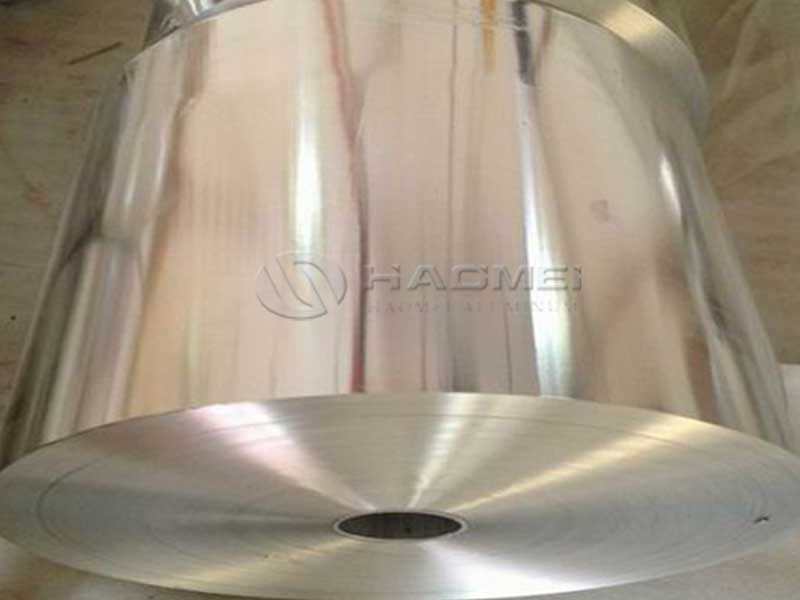
Aluminum Foil 8011 for Candy Wrapper
Aluminum Foil 8011 for Candy Wrapper: The "Flavor Bodyguard" That Also Sells the Sweet
In candy packaging, the wrapper is often treated like decoration-color, shine, and branding. In reality, it's a performance material that has to protect aroma, stop moisture swings, tolerate fast wrapping lines, and still look premium under retail lighting. From this lens, Aluminum Foil 8011 for candy wrapper is less a commodity metal and more a "flavor bodyguard": a precisely tuned barrier that helps candy keep its intended snap, chew, or melt while making the product visually irresistible.
What makes 8011 aluminum foil so widely selected for candy wrapping is not just that it is aluminum. It's the way the alloy chemistry and temper can be engineered to behave like a packaging "skin" that folds crisply, resists pinholes, holds embossing, and remains safe and stable in direct contact with food.
Why 8011 Alloy Fits Candy Wrapping Better Than "Generic Foil"
Candy wrappers face a unique combination of demands:
Aroma retention and oxidation control
Chocolate, milk-based fillings, nut oils, and fruit flavors are highly sensitive to oxygen and light. Aluminum foil is essentially impermeable to gases and light, which makes it one of the strongest packaging barriers available. 8011 is frequently used because it combines that barrier with robust processing behavior in high-speed converting.
Dead-fold that helps the wrapper stay wrapped
Many candies rely on twist wrapping or tight folding. A advantage of foil is "dead fold," meaning it holds shape after being bent. With the right temper (often O, soft annealed), 8011 can deliver excellent fold retention without spring-back-helping wrappers stay neat without excessive adhesive.
Pinholes are the hidden enemy
A candy wrapper can look perfect and still fail if microscopic pinholes let moisture and oxygen migrate. 8011 is valued in packaging because it can be produced with stable gauge control and good formability, supporting low pinhole rates when matched with proper rolling, annealing, and cleanroom-like finishing.
Print, lamination, and visual appeal
For branded candy, the foil is part billboard, part protective armor. 8011 accepts coating, printing, and lamination systems well, enabling glossy or matte finishes, embossing, and metallized effects while maintaining barrier performance.
Typical Parameters for Aluminum Foil 8011 Candy Wrapper Applications
Candy packaging formats vary, but most fall into two practical structures: direct foil wrap or laminated foil (paper/foil, PET/foil, BOPP/foil, etc.). 8011 is widely used in both.
Commonly used parameter ranges in candy-wrapping supply chains include:
- Alloy: AA 8011
- Temper: O (soft annealed) is common for dead-fold; H18/H19 are used when higher stiffness is required for certain laminate constructions and converting setups
- Thickness (gauge): often in the range of 6–20 μm for candy wrapping and lamination; thinner gauges are used when laminated to films or paper, while thicker gauges may be selected for direct wrap, embossing depth, or premium feel
- Width: customized to the wrapping machine and slitting plan, typically supplied as jumbo rolls for converters and rewinding
- Surface: one side bright/one side matte is typical due to rolling; both sides can be treated for coating/printing depending on the wrapper design
- Core ID and roll form: standardized to converter needs; stable tension and flatness are crucial for high-speed packaging lines
Because candy types differ widely-hard candy, chocolate bars, chewy sweets, gum sticks-the "best" gauge and temper are usually chosen by balancing fold behavior, stiffness, embossing, and line speed stability.
Tempering and Processing Conditions: Where the Wrapper's Personality Is Made
Think of foil temper as the wrapper's "body language." The same alloy becomes either soft and elegant or firm and crisp depending on temper.
O temper (annealed soft)
This is the classic choice for many candy wraps because it delivers strong dead-fold performance and gentle conformability around irregular shapes. If you twist wrap, fold corners, or want a smooth hand-feel, O temper often wins.
H18 / H19 (hard temper)
Harder tempers offer higher stiffness and improved web handling in certain converting and laminating lines, especially where dimensional stability matters. They can also be useful when the foil is part of a multi-layer laminate where the polymer layer contributes sealability and the foil provides barrier.
Implementation viewpoint: matching temper to wrapper mechanics
A twist wrap is a mechanical test disguised as a cute design. The foil must twist without tearing, hold the twist without relaxing, and resist cracking at micro-fold lines. Selecting temper is essentially selecting how the foil stores and releases stress at those twist points.
Implementation Standards and Quality Expectations in Candy Foil Supply
In confectionery packaging, standards aren't just paperwork-they are practical guardrails for safety and consistency.
Aluminum foil for candy wrappers is commonly produced and controlled in alignment with recognized aluminum alloy and foil standards and food-contact requirements, such as:
- Aluminum alloy and temper designation standards aligned with AA/EN conventions
- Dimensional tolerances and inspection practices based on widely adopted foil/strip standards used by global mills and converters
- Food-contact compliance frameworks aligned with regional regulations (commonly FDA-style or EU-style compliance depending on destination), including controls on cleanliness, oil residues, and migration risks when coatings/inks/adhesives are involved
In real production, candy-wrapper foil quality is often judged by converter-facing metrics such as pinhole level, surface cleanliness, wetting tension for coating/ink anchorage, flatness, gauge consistency, and slit-edge quality.
Chemical Composition of Aluminum Foil 8011 (Typical)
AA 8011 is an Al-Fe-Si family alloy. The Fe and Si help provide strength and processing stability important for thin foil rolling and handling.
Below is a commonly referenced composition range format for 8011 (values shown as weight percent). Exact limits can vary slightly by standard and supplier agreement, so procurement specs usually confirm the controlling document and test method.
| Element | Typical Range (wt%) |
|---|---|
| Aluminum (Al) | Balance |
| Silicon (Si) | 0.50–0.90 |
| Iron (Fe) | 0.60–1.00 |
| Copper (Cu) | ≤ 0.10 |
| Manganese (Mn) | ≤ 0.20 |
| Magnesium (Mg) | ≤ 0.05 |
| Zinc (Zn) | ≤ 0.10 |
| Titanium (Ti) | ≤ 0.08 |
| Chromium (Cr) | ≤ 0.05 |
| Other (each) | ≤ 0.05 |
| Other (total) | ≤ 0.15 |
Performance Properties That Matter Specifically for Candy Wrappers
Barrier performance that protects texture and aroma
Candy is extremely sensitive to moisture exchange. Hard candy can get sticky; wafers can soften; chocolate can pick up off-notes. Foil's barrier function helps stabilize the microclimate around the product.
Light-blocking that preserves color and flavor
Many flavors and fats are photo-sensitive. Foil blocks light completely at practical gauges, which can meaningfully reduce quality drift during shelf life.
Embossing and premium shelf impact
8011 foil can be embossed to add rigidity, improve hand-feel, and create high-end visual texture. That "crisp crinkle" and sculpted sheen are not just aesthetics-they influence perceived freshness and quality.
Compatibility with laminations and printing
Candy wrappers often require heat-seal layers, cold-seal systems, or paper wraps with a foil barrier. 8011 serves as the barrier backbone while polymers or papers provide sealability and tactile branding.
A Distinctive View: The Wrapper as a Micro-Climate Engineer
If you treat candy foil as "just a wrap," you'll optimize for cost per kilogram. If you treat it as micro-climate engineering, you optimize for what consumers actually experience: the first aroma burst, the intended crunch, the absence of staleness, the clean snap of a twist, the premium sound of unwrapping.
From that perspective, Aluminum Foil 8011 for candy wrapper is a highly tuned packaging material: alloy chemistry designed for stable thin rolling, temper chosen to control fold memory, and surface quality managed to support printing, lamination, and food safety. It's a quiet piece of engineering that protects the sweet-and helps it sell.
If you're sourcing 8011 aluminum foil for candy packaging, focus procurement discussions around gauge range, pinhole requirements, intended temper (O vs H18/H19), surface cleanliness, coating/printing compatibility, and compliance expectations for food-contact packaging. When these conditions are aligned, 8011 foil delivers the signature combination candy brands rely on: strong barrier protection, excellent dead-fold, high converting efficiency, and premium visual impact.
https://www.al-sale.com/a/aluminum-foil-8011-for-candy-wrapper.html